


How is Sustainable Forest Management Implemented? A Comprehensive Guide
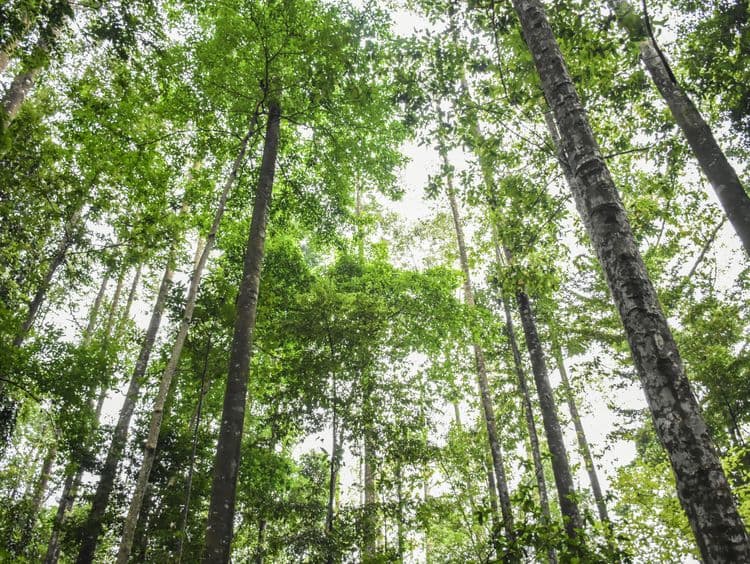
Explore the definitions, principles, and regulations of sustainable forest management, along with their application in maintaining economic, environmental, and social balance.
When hearing the term production forest, some may envision areas exploited solely for economic gain. However, industrial forest management also encompasses efforts to maintain environmental balance, protect biodiversity, comply with regulations, and engage surrounding communities. This holistic approach forms the core of sustainable forest management.
What Is Sustainable Forest Management?
Sustainable forest management is an approach that balances economic, environmental, and social aspects in forest resource utilization. This means production activities can proceed without sacrificing the ecological functions of the area or the well-being of neighboring communities.
PT Mayawana Persada (MP) exemplifies this approach within its industrial timber plantation concession. The company manages working areas under Business Licensing for Forest Utilization (Perizinan Berusaha Pemanfaatan Hutan - PBPH) across West Kalimantan, utilizing spatial planning to separate cultivation and conservation zones from the outset.
How Are Forest Areas Planned Based on Field Conditions?
Out of the total concession area, approximately 70,000 hectares are allocated specifically for conservation, while production operations function across roughly 40,000 hectares of available land.
This division is not a unilateral decision, but the result of meticulous spatial planning and biodiversity field surveys. This approach tailors land use to the specific conditions and ecological functions of each sector.
Land management also accounts for distinct concession characteristics, including peatlands and mineral soils, which require tailored operational handling. On peat soils, specialized water management systems are implemented to mitigate fire risks and ecosystem degradation. Data-driven approaches like these demonstrate that sustainable forest management operates as a tangible system on the ground rather than a mere concept on paper.
How Is Production Supported Without Clearing New Land?
To support production without expanding concession boundaries, MP operates a 24,000-square-meter nursery unit—one of the largest in the plantation forestry sector.
Continuous research ensures seedlings grow optimally within a one-year window before planting. Consequently, raw material requirements are met sustainably without opening new land within protected forest zones.
How Do Compliance and Certification Support Forest Governance?
Beyond land planning, governance systems represent an essential element of sustainability. Regulatory compliance serves as the initial foundation, translated directly into corporate policies and operational frameworks.
Any regulatory shifts at national or regional levels are analyzed prior to implementation to ensure field operations remain fully aligned with prevailing laws.
To verify that implementation meets established standards, MP adheres to forestry certifications, including:
- Timber Legality Verification (IVC)
- Sustainable Production Forest Management Performance Assessment (PHPL)
- Forest Stewardship Council (FSC) standards as a future benchmark
Internal audits are also conducted regularly across every department, referencing relevant international and national standards. These evaluations verify that procedures are actively enforced rather than treated as mere documentation.
Who Is Involved in Forest Management?
Sustainable forest management requires broad collaboration. MP operates under government oversight from Forest Management Units (KPH), the Environmental Agency, and local Forestry Offices.
Academic collaborations are maintained with institutions such as Tanjungpura University and independent consultants, supporting conservation activities including:
- Orangutan population monitoring
- High Conservation Value (HCV) area mapping
- Science- and data-driven conservation initiatives
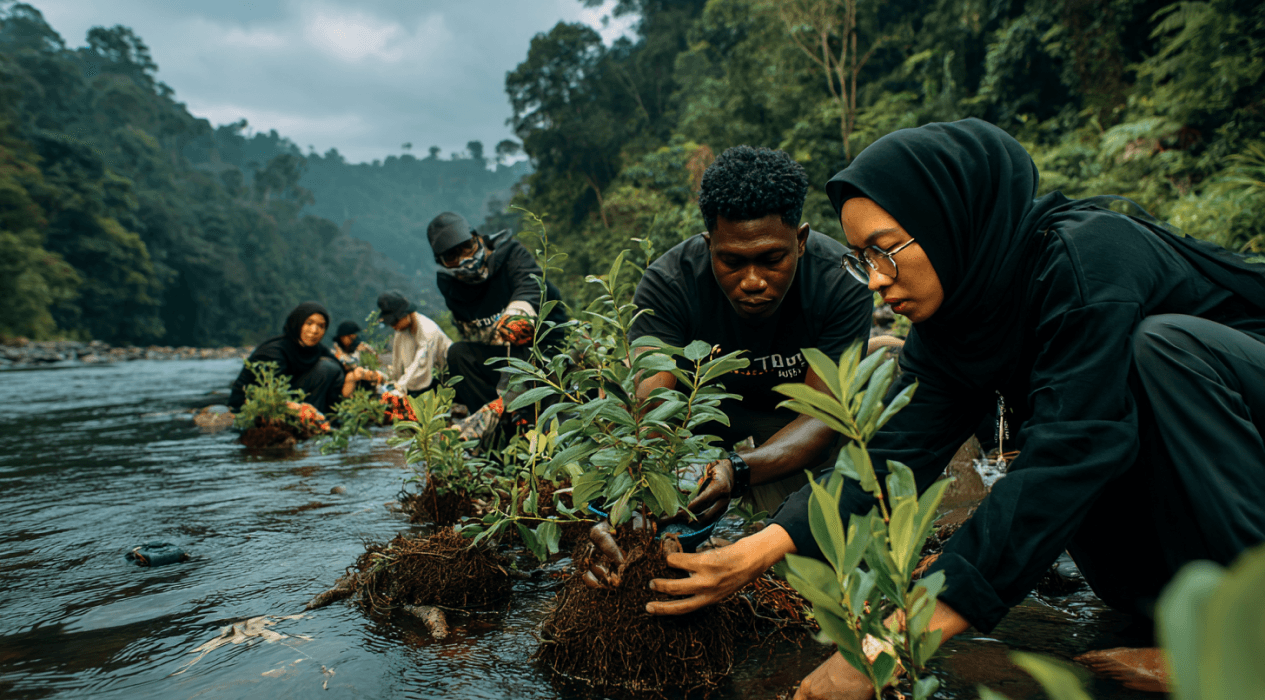
Furthermore, partnerships extend to civil society organizations and local communities through programs like participatory revegetation. This cross-sectoral collaboration reinforces independent legitimacy, ensuring evaluations do not rely solely on internal corporate assessment.
Balancing Productivity, Ecosystems, and Communities
Ultimately, sustainability materializes only when three core pillars advance together:
- Forest productivity
- Ecosystem protection
- Community welfare
At MP, nearly the entire workforce is recruited from local communities, ensuring production activities generate direct employment and economic benefits for residents surrounding the concession.
This community empowerment advances alongside the protection of conservation zones. Economic benefits derived from forestry operations connect directly with environmental preservation and strengthened local relationships.
Sustainable Forest Management Goes Beyond a Concept
Sustainable forest management is not an abstract concept confined to discourse. Its various elements interconnect seamlessly:
- Planning rooted in spatial mapping and biodiversity surveys
- Governance driven by compliance and certification
- Collaboration with government bodies and academic institutions
- Dedicated protection of high-value conservation areas
- Empowerment of local communities
Together, these approaches form an integrated, continuously evaluated system. For land-based enterprises like MP, this framework ensures that production activities proceed without compromising ecological functions or community well-being—securing a resilient foundation for today and future generations.
Discover complete information regarding PT Mayawana Persada (MP) and how sustainable forest management is applied on the ground here.
FAQ
What is sustainable forest management in the context of industrial forestry?
It is an integrated approach that enables wood production while actively preserving ecological functions, protecting biodiversity, and benefiting local communities.
How are conservation areas separated from production zones?
Concessions are mapped and planned based on field surveys and biodiversity assessments, ensuring conservation zones—such as peatlands and wildlife habitats—are managed separately from production plots.
What certifications ensure adherence to sustainable practices?
Operations follow recognized standards such as IVC (Indonesian Verification Company) and PHPL (Sustainable Production Forest Management), with continuous progression toward higher benchmarks like FSC.
How do local communities participate in forest management?
Local communities engage through employment opportunities, collaborative participatory programs like revegetation, and ongoing social welfare initiatives surrounding the concession.
Read also
 Environment & Biodiversity
Menyemai Mutu, Menggerakkan Ekonomi: Peran Sentral Nursery Modern PT Mayawana Persada
Read more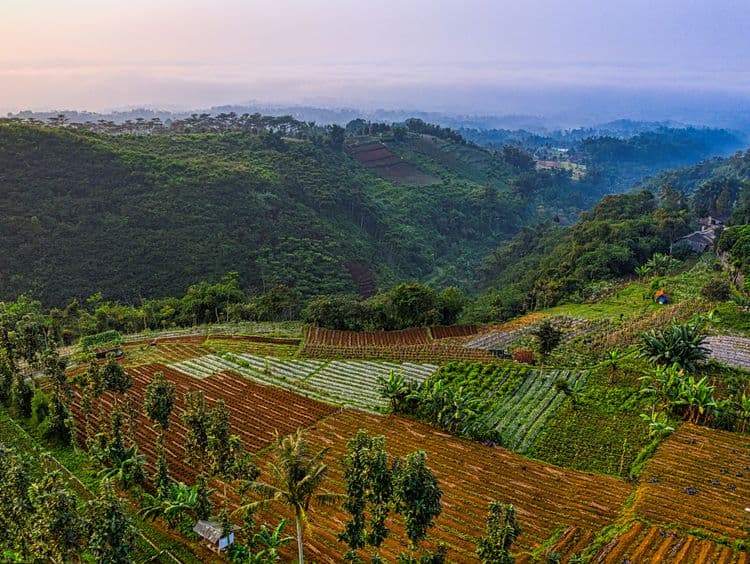 Environment & Biodiversity
More Than Just Land Clearing: The Blueprint for Sustainable Forestry Land Preparation
Read more.jpg&w=3840&q=75) Environment & Biodiversity
Environment & BiodiversityHow is Environmental Sustainability Measured in Timber Plantations? Key Indicators Explained
Read more