


Understanding Forest Conservation in Production Areas: Can They Coexist?
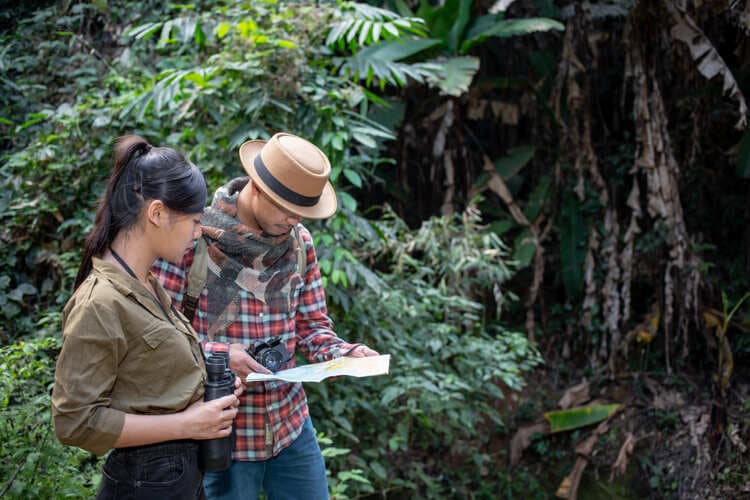
Explore how forest conservation and timber production operate side by side through High Conservation Value (HCV) frameworks, wildlife protection, and habitat corridors within industrial forest plantations (HTI).
Many of us often wonder: is it truly possible for timber production and environmental preservation to coexist within the exact same concession? This is a natural question to ask, as Industrial Plantation Forests (HTI) are predominantly associated with commercial harvesting. In reality, a single concession boundary also contains designated protected zones—most notably High Conservation Value (HCV) areas.
HCV areas operate under fundamentally different management rules than commercial production zones. How are these conservation zones identified, safeguarded, and managed so that their ecological integrity and community benefits remain intact?
What Are HCV Areas and Why Do They Differ from Production Zones?
According to Dr. Farah Diba, Dean of the Faculty of Forestry at Tanjungpura University, production forestry and HCV management follow diametrically opposed operational paths.
While commercial production forestry follows cyclical stages:
- Land preparation
- Planting
- Silvicultural maintenance
- Harvesting
HCV areas containing critical biodiversity are strictly preserved, prohibiting land clearing and timber logging.
This differentiated approach forms the foundation of responsible forest management within concessions. Both functions can operate in parallel, governed by distinct, non-negotiable management protocols.
How Are HCV Areas Identified and Designated?
The designation of an HCV zone is never arbitrary. The process adheres strictly to government-mandated standards involving comprehensive baseline surveys, field data collection, and rigorous spatial analysis.
The identification scope encompasses diverse values, including:
- Flora and fauna biodiversity
- Critical ecosystem functions
- Community socio-cultural values
- Sacred natural sites
- Ancestral gravesites preserved across generations
Through this integrated framework, protected area zoning accounts for ecological imperatives while actively respecting the cultural fabric of local communities living around the concession.
How Is Access Controlled to Protect Wildlife?
A tangible measure in safeguarding HCV areas is the enforcement of access control. The company proactively restricts access to sensitive sectors to reduce risks of human disturbance and deter illegal poaching.
This approach demonstrates that protection goes beyond lines drawn on a concession map; it demands field-level enforcement to minimize anthropogenic pressures on fragile ecosystems.
How Are Wildlife Corridors and Habitats Maintained?
Independent academic research provides the blueprint for species protection. Key academic recommendations implemented on the ground include the establishment of wide buffer zones and the enrichment planting of native fruit-bearing trees to sustain orangutan feeding grounds.
This approach ensures that production activities and conservation zones complement each other, maintaining functional wildlife corridors and food sources across the entire concession landscape.
Can Conservation Deliver Economic Value to Local Communities?
Conservation efforts do not have to stifle economic vitality. Ecotourism assets—such as natural waterfalls located inside the concession—can be responsibly developed by training community members as local tour guides.
By doing so, the ecological integrity of protected areas remains uncompromised while unlocking sustainable livelihood streams for nearby residents.
When guided by balanced spatial planning, environmental protection and economic prosperity do not have to be mutually exclusive.
Why Cross-Sector Collaboration Matters
Community welfare is paramount for long-term conservation viability. Therefore, management engages diverse stakeholders—government bodies, concession holders, academia, civil society organizations, and local villages—through formal working groups.
These collaborative forums facilitate targeted community outreach, clarifying which non-timber forest resources may be utilized sustainably and which protected species require absolute preservation. Participatory management transforms conservation from a corporate obligation into a shared commitment.
The Role of HCV Areas in Landscape-Scale Governance
Beyond direct benefits to wildlife and communities, intact natural forests deliver broader climate benefits as carbon sinks. This ecological service elevates protected zones from localized assets into vital components of landscape-scale sustainability.
HCV areas thus serve a dual role: preserving regional biodiversity while stabilizing macro-environmental balance.
Consistency: The Key to Conservation Success
Ultimately, the success of HCV governance extends beyond administrative compliance. It demands continuous corporate adherence to academic recommendations—from enforcing access restrictions and maintaining wildlife corridors to nurturing community partnerships.
Forest conservation and industrial production can indeed coexist successfully, provided that territorial boundaries are rigorously honored and every stakeholder consistently carries out their role.
To learn more about PT Mayawana Persada (MP) and its sustainable forest management practices, read our comprehensive updates here.
FAQ
Apa perbedaan kawasan NKT dengan kawasan produksi?
Kawasan produksi melalui tahapan pembukaan lahan, penanaman, pemeliharaan, dan panen, sementara kawasan NKT dengan biodiversitas tinggi dipertahankan tanpa boleh dibuka atau ditebang sama sekali.
Bagaimana proses identifikasi kawasan NKT dilakukan?
Identifikasi dilakukan berbasis standar pemerintah melalui survei, pengumpulan data, dan analisis, mencakup nilai biodiversitas flora-fauna serta nilai sosial budaya masyarakat seperti situs keramat.
Apa saja bentuk perlindungan satwa liar yang diterapkan?
Bentuknya meliputi pembatasan akses ke kawasan tertentu, pembuatan buffer zone, serta penanaman pohon buah sebagai sumber pakan orangutan sesuai rekomendasi akademik.
Bagaimana konservasi hutan memberi manfaat ekonomi bagi masyarakat?
Salah satu contohnya adalah pengembangan potensi ekowisata seperti air terjun, dengan melatih masyarakat sekitar sebagai pemandu wisata tanpa mengurangi fungsi perlindungan kawasan.
Siapa saja pihak yang terlibat dalam pengelolaan kawasan lindung?
Pengelolaan melibatkan kolaborasi lintas pihak melalui mekanisme working group, terdiri dari pemerintah, perusahaan, akademisi, organisasi masyarakat, dan warga sekitar wilayah konsesi.
Read also
 Operations & Field Activity
The Journey Towards Sustainable Forest Management Certification and Responsible Operations
Read more Environment & Biodiversity
Understanding Peatland: Characteristics and Environmental Importance
Read more Environment & Biodiversity
Sustainable Forest Management: The Core Pillar of Forest and Environmental Conservation
Read more