


Forest Fire Mitigation: Prevention and Mitigation Strategies Amidst El Niño Threats
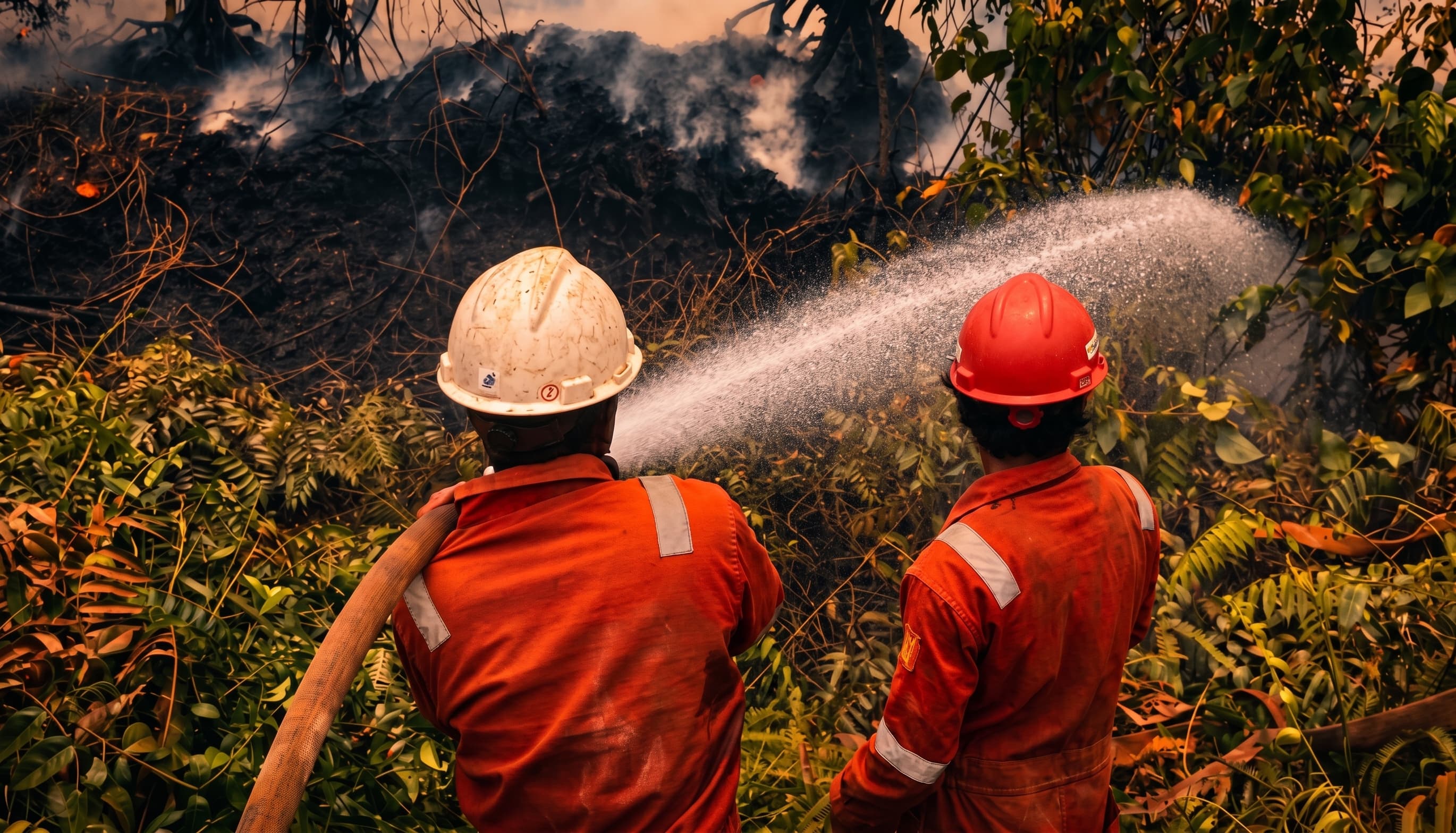
Learn comprehensive forest and land fire mitigation strategies through peatland water governance and preparedness against extreme drought threats caused by El Niño with PT Mayawana Persada.
The threat of forest and land fires (karhutla) represents one of the greatest environmental challenges for tropical regions, especially when global climate phenomena such as El Niño strike. Extreme temperature surges and significantly longer dry seasons than usual make landscapes—particularly peatland ecosystems—extremely vulnerable. Amidst this volatile weather condition, the effectiveness of forest fire mitigation can no longer rely solely on reactive firefighting methods, but rather demands an integrated science-based prevention and mitigation system implemented directly at the site level.
Characteristics of Fire Vulnerability During El Niño and Its Mitigation Theoretical Framework
The El Niño phenomenon triggers significant rainfall deficits across most parts of Indonesia, including Kalimantan. For forest and wetland landscapes, the drop in water supply directly impacts ecosystem stability:
- Water Table Decline: Without adequate rainfall supplies, the water level in peatlands drops drastically, causing subsurface organic layers to dry out.
- Subsurface Fire Risk (Smoldering): Dry peat is highly susceptible to burning beneath the soil surface. This fire characteristic does not produce large flames or thick smoke initially, making it extremely difficult to detect and extinguish if it spreads extensively.
- Dual Ecological Pressures: In addition to triggering fire threats, extreme drought slows down flora regeneration and compresses the movement range of wildlife that depends on forest moisture.
Scientifically, wetland ecosystem management and fire prevention are rooted in the principles of restorative hydrology and integrated landscape management. Based on peat restoration literature and fire ecology, successful mitigation in peat areas heavily depends on restoring the hydrological regime. When the water table is maintained at a certain threshold, soil moisture is preserved, thereby limiting oxygen availability in the lower peat layers. This condition physically inhibits smoldering combustion, which is the primary characteristic of peat fires.
The science-based forestry approach also adopts the concept of preventive landscape management, where interventions are not executed when a fire has already ignited (reactive), but rather through local micro-climate engineering. By maintaining landscape moisture through canal blockages and cover vegetation management (revegetation), ecosystem resilience against global climate anomalies such as El Niño can be significantly enhanced.

Science-Based Forest Fire Mitigation Strategies in the Field
Referring to this hydrological and mitigation theoretical foundation, forestry industry operators apply it through strict operational protocols. PT Mayawana Persada implements an integrated hydrological governance approach within its concession area in West Kalimantan to proactively suppress fire risks:
- Precise Daily Water Table Control:
PT Mayawana Persada's Assistant Head (Askep) of Environment, Agus Trijoko, explains that the company consistently maintains the groundwater table at around 40 centimeters. This daily adjustment ensures that the peat structure remains moist without excessively flooding plant roots. - Total Canal Gate Closures During the Dry Season:
As soon as drought indicators or the El Niño phase are detected, all canal gates are tightly closed to retain water reserves within the concession area. This preventive step is crucial to prevent land desiccation and minimize space for potential subsurface fires (smoldering). - Emergency Post Synergy and Routine Patrolling:
Site-level mitigation is reinforced through the establishment of emergency forest fire standby posts, real-time hotspot monitoring, and daily integrated patrols involving internal company teams alongside neighboring village communities.
Multi-Stakeholder Collaboration and Landscape Strengthening
Forest fire mitigation efforts cannot operate partially. Site-level mitigation must be supported by strengthened cross-sectoral collaboration. Through regional Working Group cooperation, PT Mayawana Persada aligns fire prevention strategies with biosphere reserve policies and broader landscape protection objectives.
Furthermore, revegetation programs utilizing endemic tree species—executed with a survival rate reaching approximately 80 percent—help restore canopy density and preserve micro-climate moisture in previously vulnerable areas. By expanding conservation zones and consistently maintaining wildlife corridors, forest ecosystems become significantly more resilient against extreme climate pressures.
Read also
 Environment & Biodiversity
Understanding Peatland: Characteristics and Environmental Importance
Read more Environment & Biodiversity
Sustainable Forest Management: The Core Pillar of Forest and Environmental Conservation
Read more Operations & Field Activity
Enhancing Water Governance and Peatland Hydrology Management
Read more