

Forest Nursery Propagation: Shaping Forest Quality from the Seedling Stage
Discover how forest nursery propagation shapes plantation quality early through rigorous seed selection, hardening off, and targeted seedling cultivation.
A resilient and productive forest is not shaped solely during field planting. The quality of future timber stands is established much earlier, right inside the nursery. Through precisely managed forest nursery propagation, seedlings are cultivated to ensure healthy, uniform, robust growth capable of adapting resiliently to varying site conditions. For us at PT Mayawana Persada, a nursery is far more than a seedling staging area; it is the vital operational foundation of sustainable tree plantations.
What Is Forest Nursery Propagation?
Forest nursery propagation encompasses the systematic sequence of activities required to produce plant-ready seedlings for commercial production stands and environmental rehabilitation zones. The operational pipeline spans high-grade seed selection, germination, sprout husbandry, pricking out into specialized containers, and gradual environmental acclimation before field dispatch.
Seed selection serves as one of the most critical determinants of plantation success. Propagation batches require superior genetic and physiological quality, elevated germination viability, and certified provenance aligned with site objectives. Premium seeds consistently produce vigorous saplings that achieve higher post-transplant survival rates.
Once seed lots are verified, growing media and containers are formulated to match specific silvicultural requirements. Substrates must supply balanced nutrition, maintain adequate moisture retention, and ensure proper drainage and aeration. During the germination phase, automated water delivery, solar exposure, and ambient temperature regulation are controlled to optimize initial juvenile emergence.
Key Stages of Nursery Husbandry

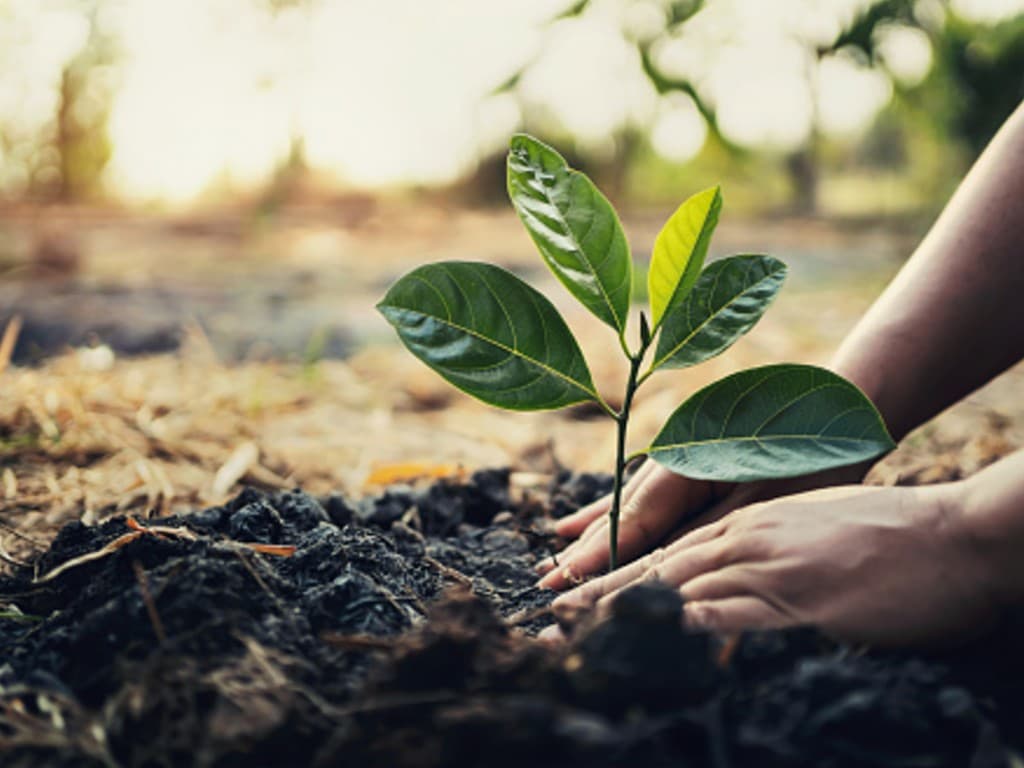
Source: Pixabay (Image for illustrative purposes only)
Following germination, seedlings advance to the growth and development phase. Daily husbandry during this stage includes micro-irrigation, targeted fertilization, weed suppression, and continuous pest and disease monitoring. Husbandry intensity is calibrated to the biological age and nutritional requirements of each botanical species.
Maintaining growth uniformity is an operational priority. Seedlings that exhibit stunted growth, physical defects, or abnormal morphologies are segregated for specialized treatment or culled. This rigorous grading ensures that every batch transported to the field satisfies defined morphological standards and displays uniform physiological vigor.
Before field deployment, all stock undergoes a hardening-off period. This phase reduces seedling dependence on the sheltered, highly regulated microclimate of the nursery bays. Seedlings are progressively introduced to ambient sunlight, natural moisture fluctuations, and open-air conditions mirroring operational compartments. Consequently, young plants build the physiological tolerance needed to withstand immediate post-planting field exposure.
Nurseries: The Operational Bedrock of Sustainable Tree Plantations
A high-capacity nursery becomes essential when seedling logistics must sustain the uninterrupted momentum of an entire forest rotational cycle. This operational model anchors PT Mayawana Persada’s nursery architecture. The development of a centralized nursery complex is designed to supply high-quality seedlings independently across the continuous plant-maintain-harvest-replant cycle.
Centralizing propagation infrastructure enables structured operational planning—from seed procurement, seedling production, and daily maintenance to grading, sorting, and field dispatch. This approach guarantees that seedling availability matches silvicultural planting targets while maintaining uncompromising quality consistency.
Furthermore, commercial production nurseries and ecological revegetation nurseries serve distinct operational mandates:
- Production nurseries focus on mass-propagating fast-growing commercial species optimized for wood fiber yield and silvicultural performance.
- Revegetation nurseries are dedicated entirely to environmental rehabilitation, restoring degraded ecosystems, and re-establishing native ecological functions.
In tropical peatland rehabilitation, for instance, species selection must mirror localized hydrology. Cultivating indigenous, endemic peat-swamp species ensures higher post-planting survival rates and accelerates natural ecological succession.
From the Nursery Bay to the Field
Nursery success does not terminate at the nursery gate. Pre-planting site preparation, hardening off, silvicultural planting methods, and subsequent growth auditing represent an interconnected continuum.
Post-transplant seedling survival must be audited through structured periodic monitoring. Field inventories supply vital empirical data regarding field survival rates, vegetative height, stem diameter increment, and canopy establishment. This performance data provides actionable feedback for field maintenance crews and helps nursery managers refine ongoing propagation techniques.
A modern nursery holds a strategic role in engineering forests that are commercially productive and ecologically sustainable. Investing in nursery quality is an investment in the long-term vitality of the forest landscape. Vigorous, uniform, and field-hardened seedlings form the essential baseline for successful field establishment, landscape rehabilitation, and the multi-generational continuity of sustainable tree plantations.
Explore more about PT Mayawana Persada’s centralized nursery operations and our forestry propagation standards here.
FAQ
What is forest nursery propagation?
Forest nursery propagation is the structured process of cultivating field-ready tree seedlings through systematic seed selection, germination, containerized growth, silvicultural maintenance, quality grading, and hardening off.
Why is nursery management essential to sustainable forestry?
Nurseries establish the foundation of successful field planting. Healthy, uniform, and hardened seedlings deliver superior field survival rates and vigorous early growth, securing high-yield timber production and effective environmental rehabilitation.
How is seed quality determined for forestry propagation?
Seed evaluation examines verified provenance, genetic purity, physiological viability, phytosanitary health, and ecological compatibility with target plantation soil and climatic conditions.