


Protecting the Voiceless: Why Wildlife Conservation Is Essential
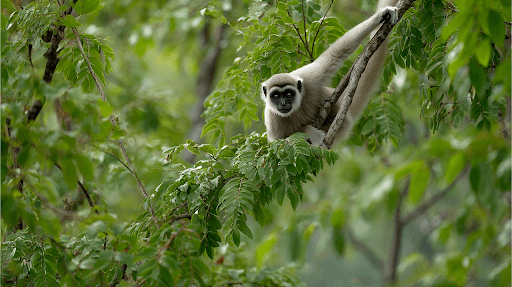
Discover why wildlife conservation matters in sustainable tree plantations through scientific research, HCV zoning, and habitat connectivity.
Wildlife conservation is fundamental to maintaining ecological equilibrium while ensuring diverse species retain safe habitats to survive and reproduce. Wild animals represent more than natural wealth; they actively sustain forest health, drive botanical regeneration, and stabilize food webs. Amid growing pressures from land-use change and human activities, conservation interventions have become indispensable—anchored in habitat protection, population tracking, and securing landscape-scale connectivity so species can navigate their environments naturally.
What Is Wildlife Conservation?
Wildlife conservation is the deliberate effort to protect, preserve, and restore wild animal populations alongside their native habitats, enabling them to survive and reproduce sustainably over the long term.
Authentic conservation reaches beyond enacting hunting bans or preventing poaching. It encompasses a multi-layered framework:
- Safeguarding habitats: preserving natural forests, wetlands, and associated ecosystems that host wildlife.
- Sustaining animal populations: tracking demographic numbers, physiological health, and movement patterns.
- Securing food sources and nesting sites: ensuring species have dependable access to survival necessities.
- Preserving habitat connectivity: establishing functional wildlife corridors so wide-ranging species, such as orangutans, can travel freely across the landscape.
- Deploying empirical research: utilizing tools like camera traps to document resident biodiversity objectively.
- Engaging multi-stakeholder coalitions: uniting government regulators, private enterprises, academic institutions, civil society organizations, and local communities in shared stewardship.
Within this framework, PT Mayawana Persada recognizes that wildlife conservation demands preserving ecologically significant areas—including dedicated wildlife sanctuaries and High Conservation Value (HCV) zones. This guarantees that key species, such as Bornean orangutans and sun bears, retain viable living spaces even within working landscapes that incorporate commercial production.
Conservation Coexisting With Production
Preserving biodiversity within a production landscape involves far more than simply designating forest parcels as protected reserves on paper. The true operational test lies in ensuring habitats remain functionally viable, wildlife possesses adequate living space, and production operations strictly adapt to ecological realities. This philosophy anchors PT Mayawana Persada’s spatial governance through High Conservation Value (HCV) mechanisms.
Under established spatial frameworks, roughly 34,399 hectares (25.16%) of the concession are officially gazetted as non-commercial Protected Conservation Areas. This allocation encompasses a dedicated Wildlife Sanctuary (Kawasan Perlindungan Satwa Liar or KPSL) spanning 13,908 hectares. Earlier High Conservation Value assessments in 2015 formally documented the presence of five protected mammal species and six protected bird species across the concession.
These spatial designations form the operational foundation that enables critical ecological zones to thrive alongside sustainable tree plantations.
Assessing Biodiversity Through Empirical Field Data
Sound conservation governance requires continuous data updates. To achieve this, an independent biodiversity assessment was conducted in 2026 in partnership with the Faculty of Forestry at Tanjungpura University. Led by Dr. Ir. Farah Diba, S.Hut., M.Si., IPU, Dean of the Faculty of Forestry, the research was executed across the company's designated conservation reserves.
The survey deployed approximately 40 camera traps along systematic transects over a two-month monitoring window. Camera traps enabled researchers to observe wildlife behaviors naturally without relying on direct human sightings. The footage confirmed the presence of Bornean orangutans—including mothers accompanied by dependent infants—sun bears, and diverse tropical bird species.
Beyond fauna, field surveys documented distinctive floral species, including endemic pitcher plants (Nepenthes) and indigenous Dipterocarpaceae trees. This botanical diversity confirms that the protected reserves continue to provide foundational habitat elements essential for multi-taxa survival.
Significance of Mother-and-Infant Orangutan Recordings

Among the most significant discoveries was the recurring visual capture of orangutan mothers with dependent young. Documenting a breeding pair with offspring represents far more than an incidental presence record; it serves as a strong biological indicator that the habitat provides dependable food resources, adequate shelter, and the environmental stability needed for successful reproduction and infant rearing.
However, recording these primates does not mean conservation objectives have been permanently fulfilled. Viable wildlife populations demand expansive, contiguous ranges. Orangutans require continuous canopy room to forage and express natural arboreal behaviors. When forest landscapes fragment, natural movement is severely constrained.
Camera-trap telemetry must therefore be utilized as empirical baseline data to understand local ecosystem health and calibrate subsequent management interventions.
Grounding Management Decisions in Scientific Guidance
The university’s field assessments produced clear recommendations that were integrated into spatial management plans. High-biodiversity compartments were advised to remain permanently exempt from conversion, safeguarding them as inviolable wildlife habitats.
This approach illustrates that conservation research looks beyond taxonomic cataloging. Empirical discoveries guide spatial planners in designating where ecological protections must be fortified. Consequently, landscape management decisions are driven by ecological conditions verified directly on the ground.
These interventions must be reviewed through periodic surveillance, recognizing that habitat conditions, population health, and broader landscape configurations shift over time.
Wildlife Corridors: The Ongoing Challenge of Landscape Connectivity
A central recommendation emphasized by researchers is establishing wildlife corridors that bridge administrative boundaries and concession limits. The objective is to ensure the mobility of orangutans and other large mammals is not severed by landscape fragmentation.
The corridor recommendation serves as a reminder that wildlife conservation cannot be solved entirely within the boundaries of a single enterprise. Animal home ranges routinely transcend legal concession lines. Preserving transboundary connectivity remains a shared landscape-level priority requiring collaborative action.
Conservation success cannot be measured solely by the gross acreage of protected land within one concession. Habitat connectivity, population genetic viability, and uninterrupted wildlife movement across borders are equally decisive benchmarks for long-term survival.
Conservation Demands Broad-Based Collaboration
Safeguarding regional biodiversity requires coordinated contributions across sectors:
- Academic institutions deliver independent scientific baselines, monitoring protocols, and technical assessments.
- Concession operators integrate recommendations into daily land management and spatial zoning.
- Government agencies establish regulatory policies, enforcement mechanisms, and cross-jurisdictional synchronization.
- NGOs and local communities reinforce on-the-ground implementation, community stewardship, and field monitoring.
This collaborative paradigm is essential when tackling ecological dynamics that cross property boundaries. Structural wildlife corridors, in particular, demand unified consensus and cross-boundary governance among neighboring landholders.
Preserving habitats for vulnerable wildlife is never a one-time achievement. It is a continuous operational journey rooted in rigorous data, objective evaluation, habitat preservation, and multi-stakeholder alliances. Practice at PT Mayawana Persada demonstrates that sustainable tree plantations and biodiversity protection can operate side by side. However, the broader challenge of regional landscape connectivity remains an open task—one that demands shared commitment to ensure wildlife corridors endure for generations to come.
FAQ
What is wildlife conservation?
Wildlife conservation is the planned protection, management, and restoration of wild animal populations and their natural ecosystems, ensuring they survive, reproduce, and maintain ecological functions over the long term.
Why is wildlife conservation vital?
Every wildlife species performs a functional role in balancing ecosystems. The loss of a single keystone species can trigger trophic cascades, disrupting food webs, plant pollination, seed dispersal, and broader forest regeneration.
What does wildlife conservation involve in practice?
Practical conservation activities encompass habitat protection, population tracking, anti-poaching patrols, ecosystem restoration, scientific biodiversity assessments, and establishing connected wildlife corridors across fragmented terrains.
How do researchers determine which species inhabit a specific concession?
A standard non-invasive method is deploying camera traps—automated motion-sensor cameras that record wildlife footage when movement is detected. This allows scientists to inventory species, assess population health, and analyze activity patterns without disturbing the animals.
Does conservation require a landscape to be completely devoid of human activity?
Not necessarily. Effective conservation can be achieved by designating and rigorously protecting High Conservation Value (HCV) areas within managed landscapes, while ensuring neighboring activities across sustainable tree plantations adapt their practices to avoid disrupting critical habitat functions.
Read also
 Environment & Biodiversity
Sustainable Forest Management: The Core Pillar of Forest and Environmental Conservation
Read more Governance & Partnership
PT Mayawana Persada Conducts Science-Based Fire Mitigation by Strengthening Peatland Hydrology Management
Read more Environment & Biodiversity
Protecting Endangered Habitats: Conservation Commitments in Indonesian Borneo
Read more