


Peatland Rehabilitation Is More Than Replanting: What Are the Stages of Ecological Recovery?
.jpg&w=3840&q=75)
Peatland rehabilitation goes beyond replanting. Discover the four essential stages: hydrological control, endemic revegetation, monitoring, and conservation.
Many assume peatland rehabilitation simply means replanting trees across cleared terrain—once the saplings are in the soil, the forest is considered restored. Yet beneath the peat surface lies a variable that dictates true restoration success far more than planting alone: water.
Without sound hydrological management, even millions of planted seedlings risk failure or, worse, can trigger catastrophic underground blazes during dry spells.
For PT Mayawana Persada, an enterprise managing sustainable tree plantations in Ketapang and North Kayong Regencies, West Kalimantan, this hydrological reality serves as the cornerstone of ecological restoration. For the company’s environmental management teams, rehabilitating peat swamp ecosystems is not a superficial replanting exercise; it is an integrated, long-term journey connecting water management, native revegetation, habitat protection, and the strategic expansion of conservation reserves into a unified landscape.
What Is Peatland Rehabilitation and Why Is It Vital?

Peatland rehabilitation is the systematic restoration of degraded peat swamp ecosystems to revive their fundamental ecological functions as long-term carbon sinks, hydrological regulators, and biodiversity havens. Unlike mineral soils, tropical peat possesses unique properties: it stores colossal volumes of water, yet becomes exceptionally flammable if the water table drops too low.
Due to this fragile dynamic, peatland rehabilitation cannot focus solely on vegetative greening. It requires a multidisciplinary framework harmonizing water management, selective endemic planting, and multi-year field monitoring to ensure authentic functional recovery—far beyond cosmetic ground cover.
The primary phases of this framework comprise:
- Hydrological management: maintaining stable water tables to preserve soil moisture.
- Revegetation: systematic planting of native peat-swamp species guided by official recovery plans.
- Monitoring & evaluation: regular growth tracking and prompt infilling.
- Conservation consolidation: conservation reserve expansion and cross-sector working groups.
Phase 1: Hydrological Control as the Foundation
Peatland rehabilitation invariably starts with water. Agus Trijoko, Environment Assistant Head at PT Mayawana Persada, explains that managing groundwater levels is the single most decisive step in maintaining peat ecosystem equilibrium.
PT Mayawana Persada enforces an internal water table standard of approximately 40 cm, significantly more stringent than the 60–80 cm regulatory window established by government guidelines. Measurements are audited daily. During the dry season, all canal stoplogs and water-control gates are locked to retain ground moisture. If daily gauges register any decline, canal structures are adjusted immediately to restore optimal water levels.
This proactive control is indispensable because peat fires behave fundamentally differently from open blazes on mineral land. Peat smolders silently beneath the surface, making early visual detection nearly impossible. Keeping the peat consistently saturated neutralizes ignition risks long before flames can ever manifest.
Phase 2: Revegetation Using Endemic Peat Species
Once hydrological stability is achieved, rehabilitation advances to active revegetation. Target compartments are delineated according to official peat ecosystem recovery documents, prioritizing sectors with low vegetative canopy cover. Planting schedules give absolute priority to indigenous, endemic peat swamp species known for their physiological resilience in acidic, waterlogged conditions.
Charia Salasari, Sustainability Assistant at PT Mayawana Persada, emphasizes that all planting follows rigorous standard operating procedures referenced in the restoration master plan, complete with spatial coordinates, permanent monitoring plots, and formal verification frameworks.
In the field, planting follows a 5×5-meter grid. Seedlings are propagated in dedicated rehabilitation nurseries located directly inside the forest interior. These are segregated entirely from commercial production nurseries to ensure juvenile plants acclimate naturally to native microclimates prior to transplanting.
Phase 3: Long-Term Monitoring and Growth Evaluation
Ecological rehabilitation does not end when seedlings take root. Every six months, field teams conduct post-planting surveys, recording stem diameter and total height to track vegetative performance. Dead or stunted seedlings are replaced promptly through infilling to maintain target stocking densities.
The current field survival rate stands at approximately 80%. Seedling mortality is predominantly caused by transplant shock when moving from nursery beds to open ground. To mitigate this risk, seedlings now undergo an extended hardening-off acclimatization phase in natural forest conditions before being introduced to planting sites.
Phase 4: Strengthening Landscape-Scale Conservation Reserves
Peatland rehabilitation is intrinsically linked to the expansion and protection of conservation zones across the concession. Muharjan, Sustainability Assistant Head at PT Mayawana Persada, highlights plans to increase designated conservation zones from 37,000 hectares to 71,000 hectares. This strategic expansion is currently being formalized within the revised 10-Year Forest Work Plan (RKU) to elevate regional environmental management.
This landscape consolidation is reinforced through multi-stakeholder Working Groups involving government agencies, academic institutions, and neighboring landholders. These alliances collaborate to protect contiguous biosphere reserve corridors, streamline landscape governance, enhance joint wildfire prevention, and secure recovering habitats for endangered wildlife.
Peatland Rehabilitation Is a Multidimensional Process
Rehabilitating tropical peat is an intricate, multi-layered journey that extends far beyond planting trees. From groundwater stabilization and endemic species selection to biannual auditing and landscape-scale conservation planning, every phase is interconnected. Together, they guarantee that peatland ecosystems regain their authentic ecological functions, rather than merely appearing green on the surface.
Want to dive deeper into our daily peat water governance? Read our guide on sustainable peatland management for detailed insights into our hydrological standards and fire prevention regimes across sustainable tree plantations.
FAQ
What is the target groundwater table depth for sustainable peat management?
The internal operational standard maintains groundwater depth at approximately 40 cm, which is more stringent than the 60–80 cm regulatory window mandated by national guidelines. This ensures continuous peat moisture to suppress fire hazards without hindering tree root health.
Why are peat fires more difficult to detect than mineral soil fires?
Peat fires burn and smolder beneath the soil surface, unlike open flames on mineral ground. This subterranean combustion makes visual detection difficult, which is why maintaining high peat moisture through canal management is the most effective preventative strategy.
How is peatland revegetation carried out in sustainable tree plantations?
Revegetation is guided by official peat recovery plans, specifying planting coordinates, permanent monitoring plots, and auditing standards. Indigenous peat-swamp species are planted at a 5×5-meter spacing, utilizing hardened seedlings raised in dedicated in-forest restoration nurseries.
What is the current success rate of peatland revegetation?
The recorded seedling survival rate is approximately 80%, evaluated through biannual monitoring of tree height and diameter growth. Any seedling mortality is promptly addressed through systematic infilling.
Read also
 Environment & Biodiversity
Understanding Peatland: Characteristics and Environmental Importance
Read more Environment & Biodiversity
Sustainable Forest Management: The Core Pillar of Forest and Environmental Conservation
Read more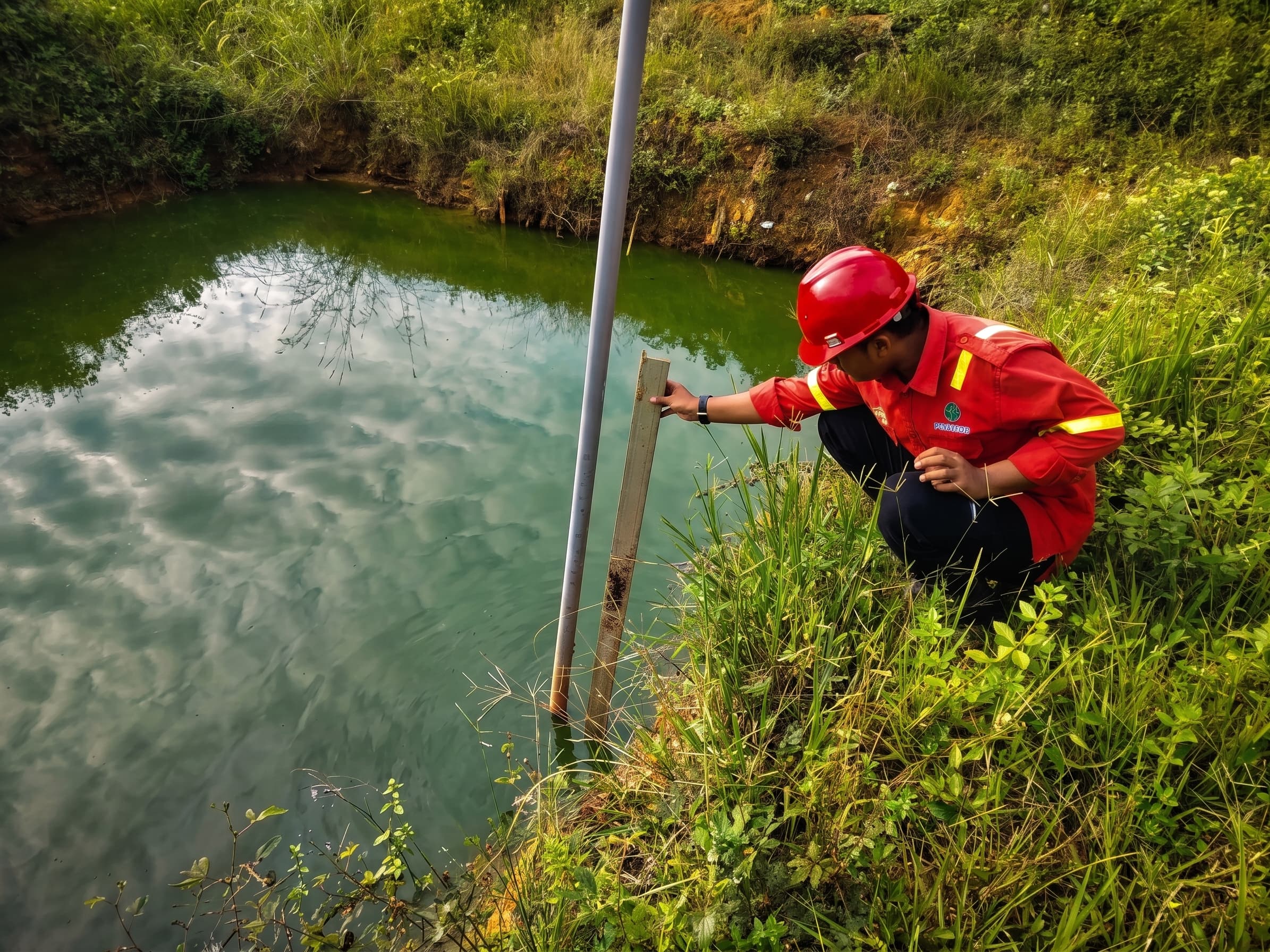 Operations & Field Activity
Enhancing Water Governance and Peatland Hydrology Management
Read more