


Burning Peatland: The Dynamics of Subterranean Smoldering and Science-Based Mitigation in Forestry Landscapes
.jpeg&w=3840&q=75)
Explore the science of burning peatlands: subterranean smoldering combustion, hydrophobic soil barriers, the 40 cm water table threshold, and canal blocking.
To the general public, a forest fire is typically characterized by towering flames consuming the upper canopy. However, a burning peatland presents an entirely distinct set of chemical and thermodynamic realities. In tropical peat swamps, the most destructive hazard does not rage visibly above ground; it creeps silently through the subsurface.
Subsurface peat fires represent one of the most persistent ecological challenges across the tropical belt. When intact peat domes suffer artificial drainage and prolonged drought induced by cyclical anomalies like El Niño, subterranean organic matter transforms into a dense, combustible fuel bed. Fires penetrating this subsurface matrix do not burn with open flames. Instead, they propagate through a flameless, low-temperature process known as subterranean smoldering combustion.
Pouring water onto a burning peatland from the surface is often completely ineffective. Surface water dousing rapidly vaporizes before reaching glowing combustion zones situated tens of centimeters to several meters underground. Countering this threat requires a fundamental shift: moving away from reactive emergency firefighting toward precision, preventative eco-hydrological management grounded at the field level.
Why Subterranean Peat Fires Are Extremely Difficult to Extinguish
Understanding why a burning peatland produces persistent, toxic haze requires examining the physical properties of tropical peat. Unlike regular mineral soil, tropical peat consists of thousands of years of partially decayed organic plant biomass preserved in waterlogged, acidic conditions.
When that natural hydrological equilibrium is lost, the physical and chemical characteristics of the peat matrix change drastically:
- Low-Temperature Smoldering Combustion: Unlike flaming combustion on dry surface timber—which requires high temperatures and abundant open-air oxygen—peat smoldering proceeds at lower temperatures (roughly 300°C–600°C). Rather than producing open flames, it advances as a slow, flameless combustion zone migrating through the microscopic pores of the dry organic matrix.
- Deoxygenation and Low-Air Requirement: Smoldering is fundamentally an oxygen-limited process. The high packing density of dried organic material allows combustion to sustain itself deep underground even in micro-environments with low oxygen concentrations, tracking buried tree roots and dry peat veins.
- Dense Toxic Particulate Emissions: Due to incomplete combustion in oxygen-deprived conditions, burning peat yields massive concentrations of carbon monoxide (CO), methane ($CH_4$), and fine particulate matter ($PM_{2.5}$). These emissions far exceed the particulate concentrations produced by standard surface vegetation fires, generating the dense, persistent regional haze that lingers for weeks.
- Post-Drying Hydrophobicity: When tropical peat is subjected to severe over-draining, the organic matter undergoes irreversible structural changes, becoming hydrophobic (water-repellent). Once hydrophobic, the dried peat actively repels water; suppression water sprayed onto the surface runs off laterally rather than penetrating downward to extinguish the subterranean combustion front.
The Stress of El Niño Cycles on Tropical Peat Domes
In their natural, undisturbed state, intact peat domes maintain strong resilience against wildfire due to high year-round water saturation. However, climatic anomalies dramatically escalate their fire vulnerability:
- Precipitation Deficits: Prolonged El Niño droughts drastically reduce regional rainfall, starving the wetland of its primary replenishment source.
- Rapid Water-Table Depression: High solar radiation and elevated ambient temperatures accelerate surface evaporation, drawing groundwater reserves downward and stripping capillary moisture from the upper peat stratum.
- Atmospheric Oxidation of Subsurface Layers: As the water level drops below natural tolerance thresholds, empty soil pores previously filled with water are invaded by atmospheric oxygen. This aerated organic stratum turns into a dense subterranean fuel reservoir ready to ignite from the smallest surface spark.
Precision Hydrological Engineering: Severing the Combustion Pathway
Preventing a peatland from igniting is far more effective than attempting to extinguish a fire that has already migrated underground. The cornerstone of permanent fire prevention lies in precision hydrological engineering—an operational framework implemented across sustainable concessions like PT Mayawana Persada in West Kalimantan.
Guided by official statutory Peatland Restoration parameters, preventative field management focuses on maintaining landscape-wide water saturation:
- Enforcing the Critical 40-Centimeter Water Table Threshold: Ground crews monitor and regulate water levels to ensure the groundwater table does not drop past the 40-centimeter threshold below the peat surface. This boundary preserves continuous capillary moisture in the top peat horizon, cutting off the entry of atmospheric oxygen into subsurface pores and eliminating the conditions required for smoldering to take hold.
- Automated Surveillance via Piezometer Networks: Subsurface water levels are tracked across vulnerable zones using integrated networks of automated dataloggers and manual piezometer wells. This real-time data allows hydrology teams to detect localized drops in moisture long before peat begins exhibiting hydrophobic characteristics.
- Deployment of Modular Canal Blockings and Automated Sluice Gates: Open artificial canals represent the primary vector for rapid drainage out of peat domes. By constructing modular canal blocks and securing sluice gates prior to dry season onsets, millions of cubic meters of fresh water are trapped inside the peat dome rather than draining into coastal basins.
- Maintaining Wet Landscape Buffers: Retaining water reserves across canal networks keeps boundary zones and conservation set-asides fully saturated. This wet perimeter prevents surface brush fires from penetrating the soil and transitioning into subterranean smoldering combustion.
Hydrology as the Primary Defense for Tropical Peatlands
The science of a burning peatland demonstrates that tropical wetlands cannot be managed like mineral-soil landscapes. The primary danger of peat fires lies in their subterranean, low-oxygen smoldering combustion—a process that remains invisible from the surface, resists traditional aerial dousing, and generates hazardous particulate haze.
When confronting extreme drought cycles, the only permanent defense is eliminating the preconditions for ignition before combustion starts. By enforcing the 40-centimeter groundwater threshold, verifying moisture levels via continuous piezometer tracking, and locking in water reserves with engineered canal blockings, tropical peatlands retain their natural identity as stable terrestrial carbon reservoirs. The science is straightforward: the most effective way to extinguish a subsurface peat fire is to ensure the peat never dries out in the first place.
FAQ
Why does a burning peatland produce far more smoke than a surface timber fire?
Peat fires burn via subterranean smoldering combustion under oxygen-deprived conditions. This incomplete combustion generates substantially higher volumes of unoxidized particulate matter, carbon monoxide, and methane, resulting in dense, suffocating haze that lingers for extended periods.
What causes dried peat to become hydrophobic?
When organic peat soil is over-drained and exposed to severe heat, its chemical structure alters irreversibly, causing it to repel water. Suppression water sprayed onto hydrophobic peat simply sheets off the surface without soaking into the soil, leaving subterranean embers intact below.
Why is the 40-centimeter water table threshold considered the scientific baseline for peatland conservation?
Tropical wetland hydrology demonstrates that keeping groundwater within 40 centimeters of the surface maintains sufficient capillary pull to keep the upper organic layer damp. This moisture saturation blocks atmospheric oxygen from entering the soil matrix, neutralizing the fuel conditions necessary for smoldering.
How does canal blocking prevent subterranean peat fires?
Canals cut into peat domes act as drainage channels that draw fresh water away from the landscape. Canal blockings act as modular dams; closing their sluice gates ahead of dry spells traps fresh water within the peat dome, elevating the water table and keeping the peat sponge saturated.
Read also
 Environment & Biodiversity
Unveiling the Bornean Orangutan: Characteristics, Behavior, Distribution, and PT Mayawana Persada’s Habitat Protection Efforts
Read more Environment & Biodiversity
Understanding Peatland: Characteristics and Environmental Importance
Read more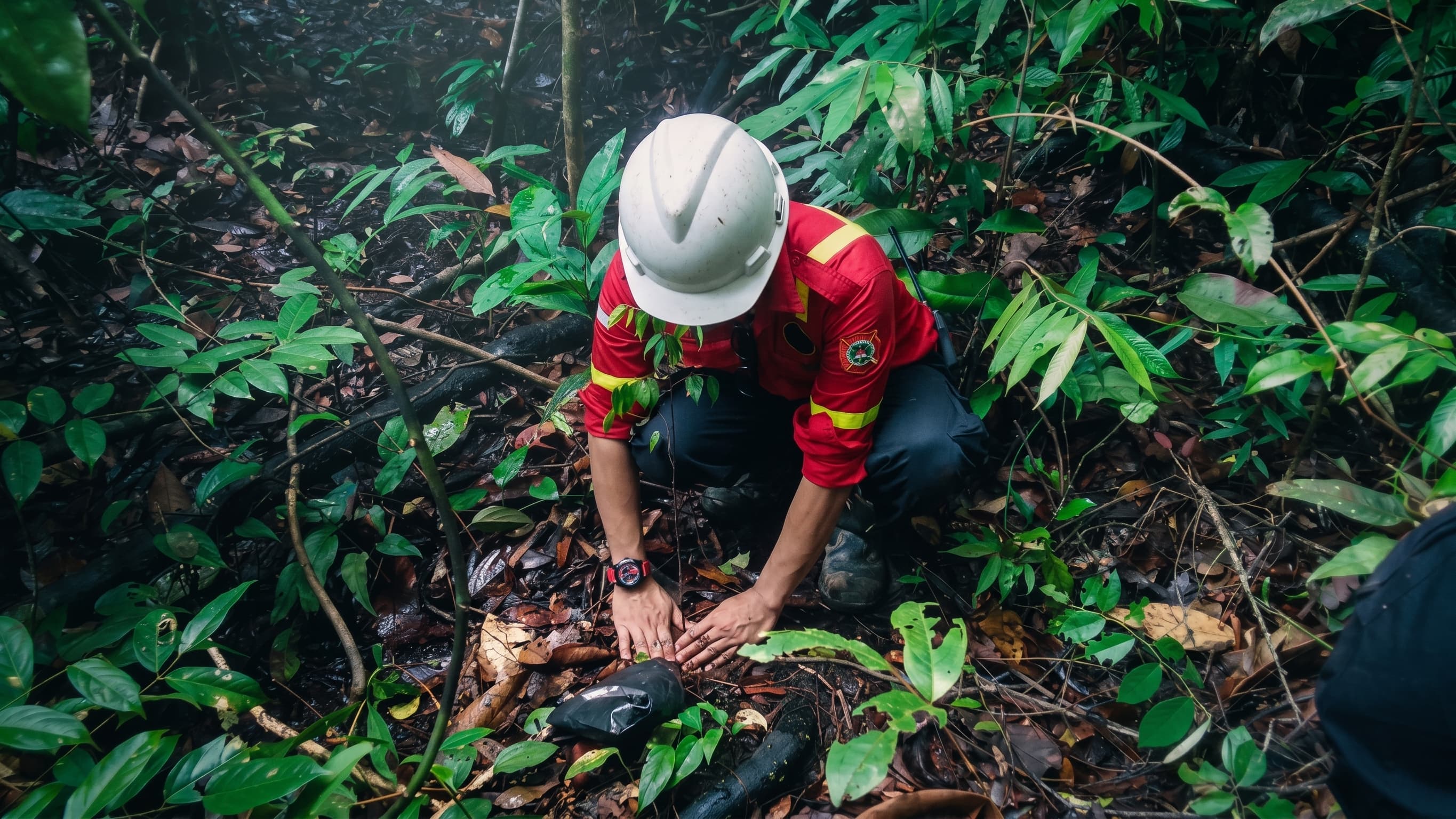 Environment & Biodiversity
Sustainable Forest Management: The Core Pillar of Forest and Environmental Conservation
Read more